- 07 November 26
AdsPower Extends Anti-Detect Infrastructure With Proxy Traffic APIs and Chrome 156 Fingerprint Stack Update
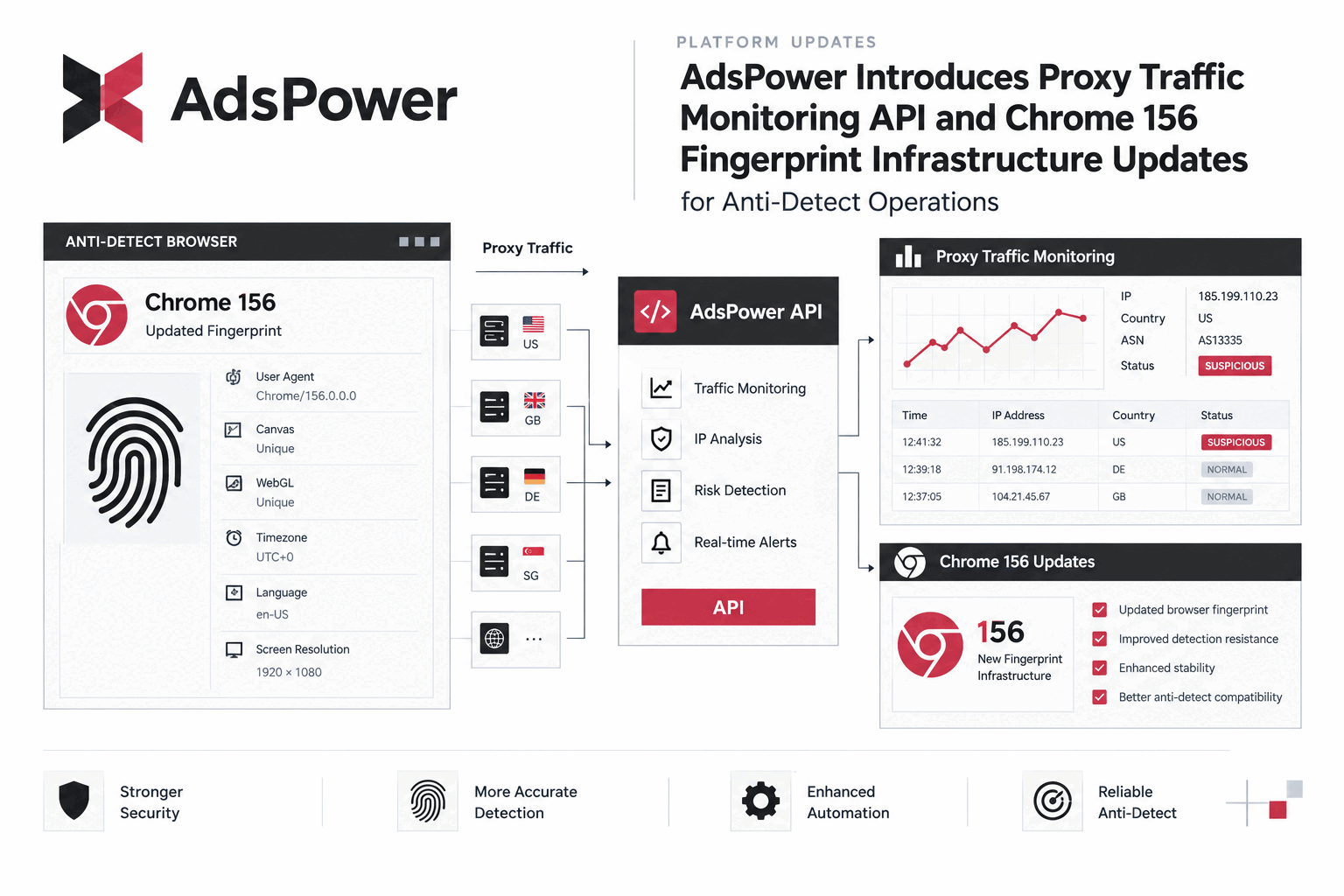
AdsPower released a new platform update during the last 48h that combines browser-core changes, anti-detect fingerprint adjustments, API expansion, and operational improvements for proxy management. The update is centered on Chrome 156 engine support across Windows, macOS, and Linux environments, accompanied by matching User-Agent, ChromeDriver, and fingerprint parameter revisions. For teams operating multi-account infrastructures, the release is notable because browser-kernel alignment remains a critical factor in reducing environment inconsistencies during account creation, warming, and scaling workflows. Source: [https://www.adspower.net/release/2026-04]
Technical Change Set
The most operationally relevant addition is a new API capability that exposes dynamic proxy traffic consumption data. Teams can now retrieve available proxy bandwidth, expiration information, update timestamps, and daily usage statistics through API access rather than relying exclusively on manual dashboard inspection. This expands observability for traffic operations and allows internal monitoring systems to detect approaching exhaustion events before they affect campaign delivery or account-management processes. Source: [https://www.adspower.net/release/2026-04]
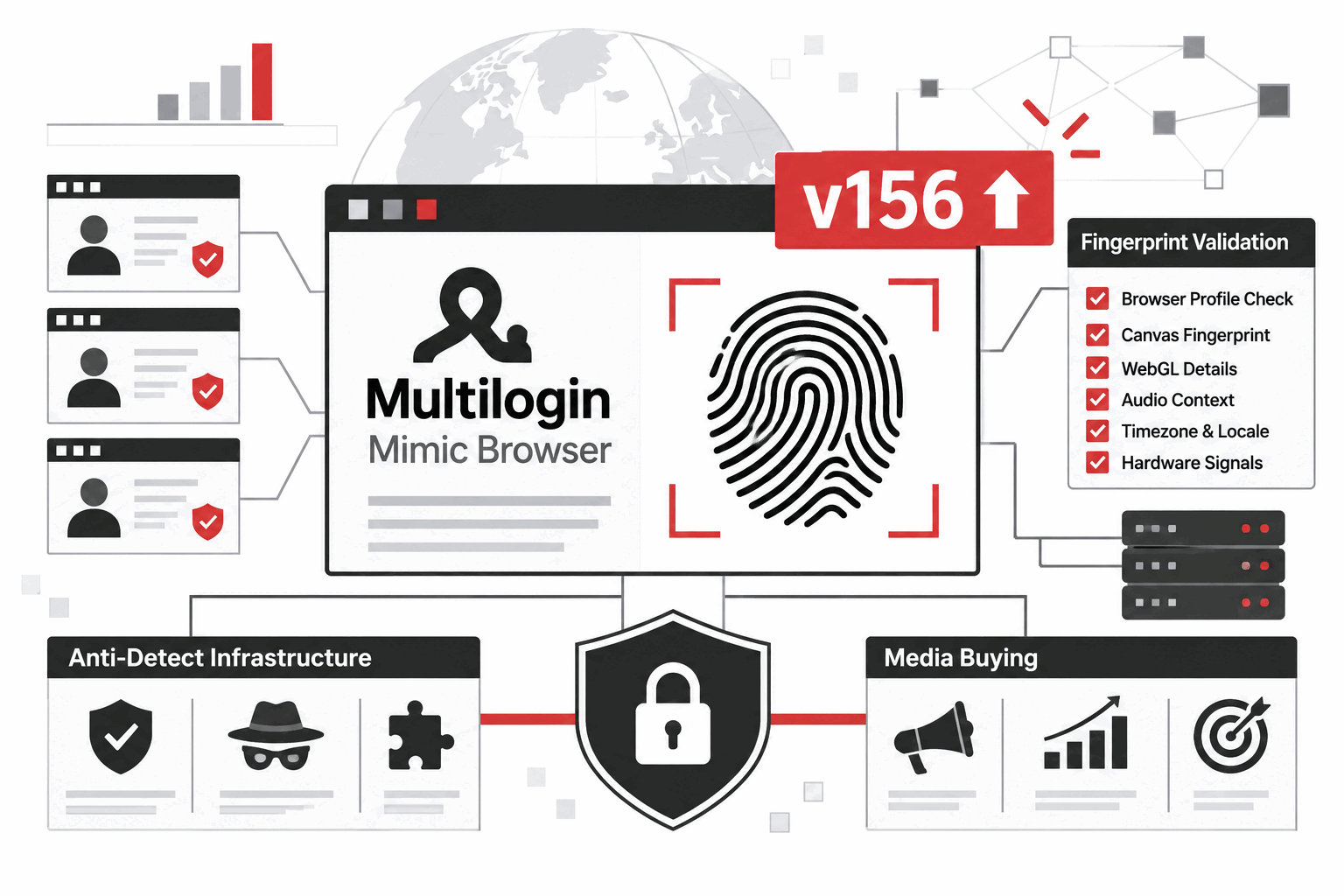
At the browser layer, AdsPower completed support for Chrome 156 while synchronizing associated browser-identification components. The vendor states that User-Agent definitions, browser-kernel elements, and ChromeDriver compatibility were updated together with fingerprint-related parameters. Such synchronization is typically important for operators running automation frameworks, account farms, affiliate traffic infrastructures, and QA environments where kernel-version mismatches may generate detectable anomalies. Sources: [https://www.adspower.com/blog/what-is-new-in-adspower-browser-october-2026] [https://www.adspower.net/release/2026-04]
Operational Impact for Media Buyers
From an execution perspective, the update reduces several routine infrastructure risks. Proxy inventory can now be monitored programmatically, while browser environments receive a more recent kernel profile. AdsPower also reported improvements to AI Agent workflows and iOS profile handling, including environment synchronization, cookie-management refinements, and compatibility enhancements for certain third-party logins. Source: [https://www.adspower.net/release/2026-04]
Developers managing large account portfolios additionally received new tooling for proxy-traffic visibility and AI-assisted operational workflows. The release continues the broader industry trend toward tighter integration between anti-detect environments, automation systems, and infrastructure observability rather than focusing exclusively on browser fingerprint spoofing. Sources: [https://www.adspower.com/blog/what-is-new-in-adspower-browser-october-2026] [https://www.adspower.net/release/2026-04]
Community Signals
Industry discussion around recent anti-detect releases has largely focused on maintaining parity with rapidly advancing Chromium versions and minimizing detectable drift between declared and observed browser attributes. The AdsPower update directly addresses that area through Chrome 156 support and refreshed fingerprint datasets. While users have highlighted the operational value of the new API and automation capabilities, no confirmed reports currently indicate abnormal delivery patterns, moderation spikes, or tracking disruptions associated with this update. The root cause behind any future detection-rate changes remains unconfirmed at this stage.
Sources
- — https://www.adspower.net/release/2026-04
- — https://www.adspower.com/blog/what-is-new-in-adspower-browser-october-2026
- — https://www.adspower.com/blog-news
Latest Blog